Surfing in Mauritius · Boards
Every board
is a compromise.
There is no best surfboard, only a board that suits the wave, the day and the surfer. This is what the shapes are called, what each one is actually for, and how to read the numbers on the stringer.
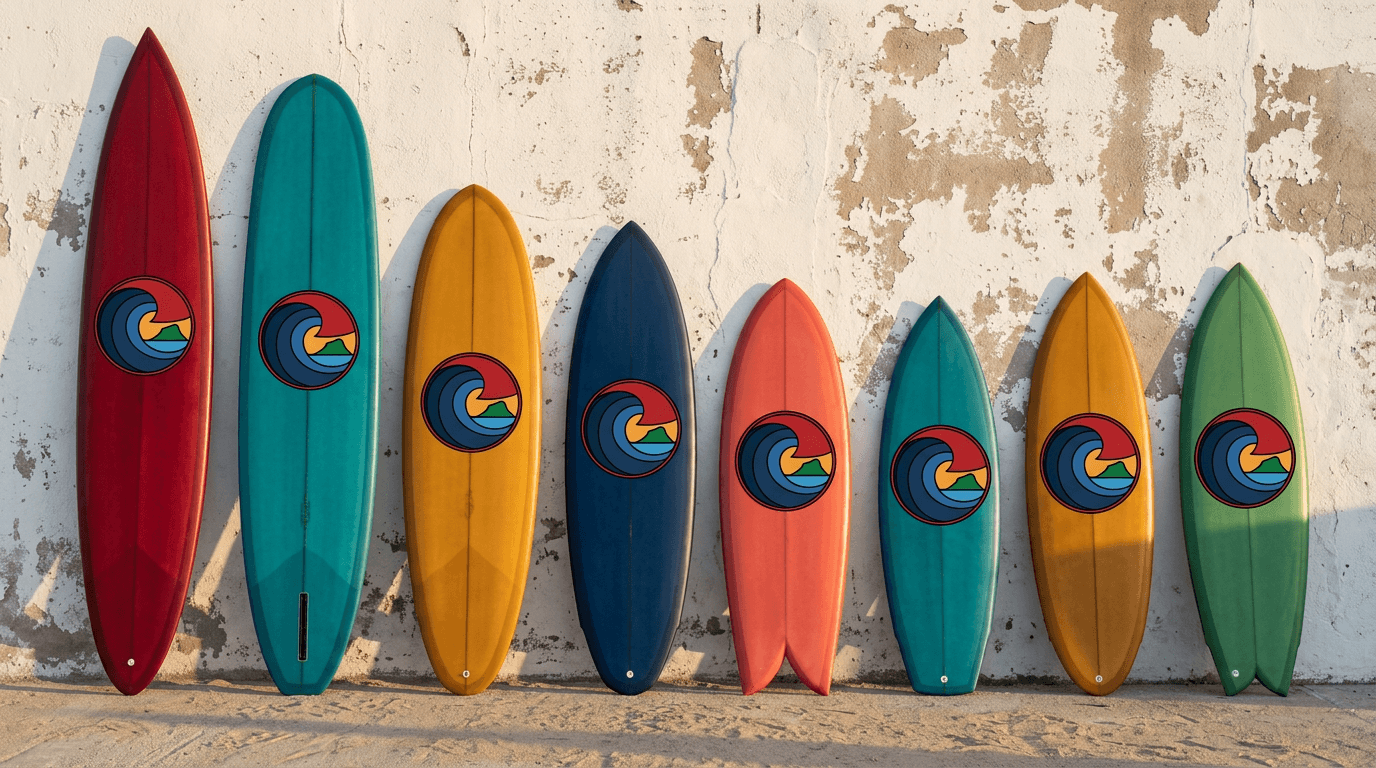
The rack
Twelve shapes.
Tap any board for its numbers, its outline to scale, and an honest account of what it gives you and what it costs you.
Side by side
Outlines, to scale.
The photographs are all shot the same size, which flatters the short boards. These are the real outlines in the same coordinate space — one foot per gridline — so a nine-six really is a foot and a half longer than a seven-six.
| Length | 72″ | 114″ |
|---|---|---|
| Width | 18.75″ | 23″ |
| Volume | 26 – 30 L | 70 – 80 L |
| Fins | Thruster (three) | One large single fin |
| Tail | Squash | Square |
Anatomy
The parts, and what they do.
Eight things every shaper will ask you about, and what each one actually changes.
Underneath
Fin configurations.
Fins are half the board. The same blank feels like a different craft with two fins under it instead of three.
Smooth, drawn-out, hard to break loose. Everything a longboard wants and most of what a mid-length wants.
Longboards, mid-lengthsFast and loose. No centre fin dragging, so it accelerates — and lets go if you push the tail too hard.
Fish, retro shapesThe default. The rear fin holds the tail while the side fins drive. Predictable everywhere, best in nothing.
Shortboards, step-ups, gunsTwin speed with more hold. Two fins on each rail keep it locked in a fast wave, with no centre fin slowing it.
Hybrids, small-wave boards, barrelsOne long centre fin in a box plus two small sides. Longboard glide with the option of a real turn.
Funboards, performance longboardsNot a setup, an option. Five boxes so one board can be a thruster today and a quad tomorrow.
Most modern shortboardsA big centre fin with low swept runners and concaves that channel water out the tail. Rare, distinctive, very fast.
Cult shapes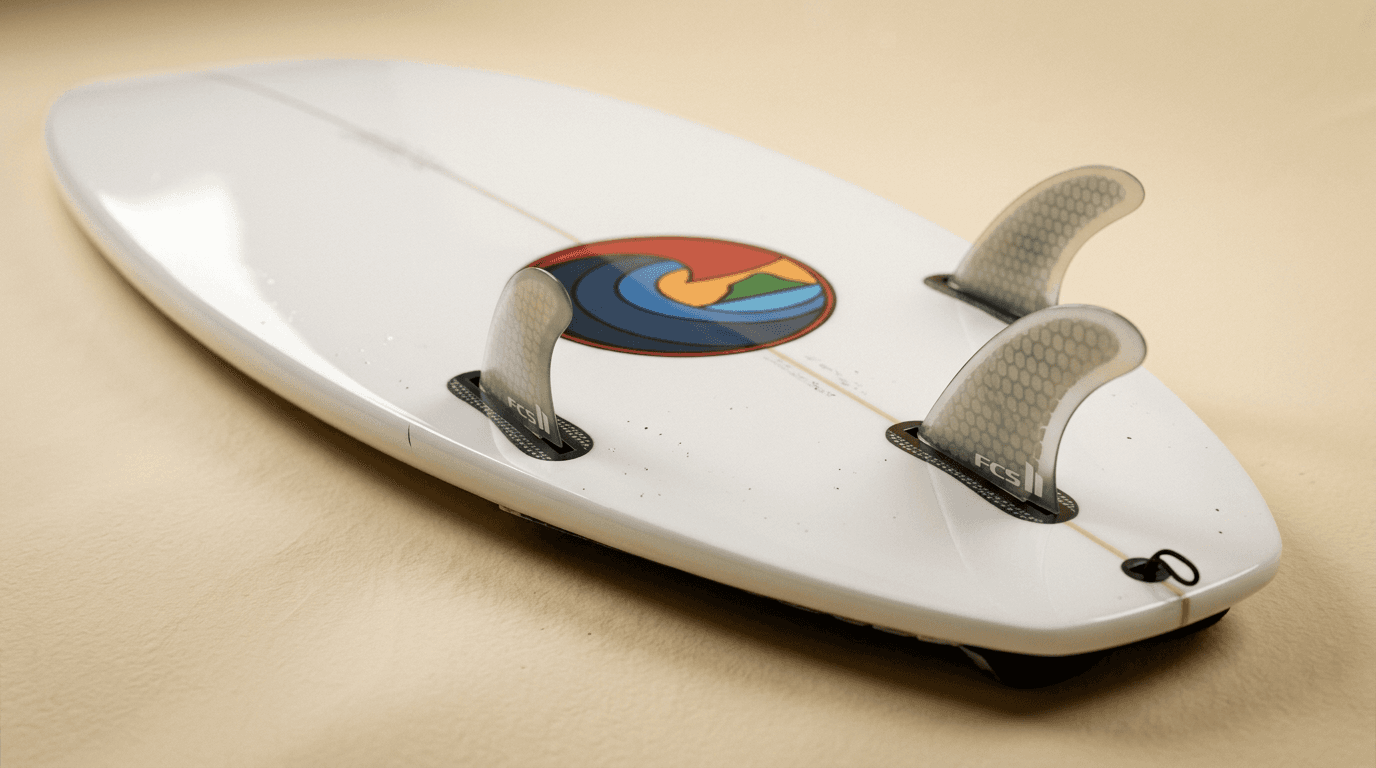
The back end
Tail shapes.
All seven cut into the same six-foot outline, so you are comparing the tail and nothing else. More area releases and turns; less area holds.
The all-rounder. Enough tail area to pivot off, corners squared just enough to bite. Most shortboards.
Smoother than a squash, less area, more hold. Drawn-out turns on a steeper wave.
The least area and the most hold. It buries in the face on a steep drop. Step-ups and guns.
Two pin tails with the middle cut out — width to plane, points to hold. The fish tail.
Maximum area and lift right at the back. Longboards and funboards; helps hold a noseride.
A squash with the corners cut away. Shortens the rail line so it pivots earlier than it looks like it should.
A step cut into the rail before the tail. Narrows the tail without shortening it — a break in the rail line to turn off.
The number that matters
How much volume?
Length and width are what people talk about; litres are what actually decide whether you catch waves. Here is the arithmetic a shaper starts from.
Riding down the line, turning both ways.
Boards in that window
A guide, not a shop. Dimensions and volumes are the middle of the range a shaper would quote for a 75 kg surfer — yours will differ. The boards are studio renders carrying the championship badge; the outlines are generated from real shaper measurements. Have a local shaper check any number before you spend money on it.
Now find a wave for it.
Seven breaks on this island, and each one wants something different under your feet. And before you paddle out at any of them, read the etiquette.